
What to Do After a House Fire: A San Diego Checklist
Updated November 2026
★ 5.0 · 21 Google reviews · IICRC Certified Firm · BBB Accredited · CA License #1137252
Short answer: go back in only when the fire department says the building is safe. Call your insurer and photograph everything before anything is moved. Get the openings boarded up and the roof tarped, keep the HVAC off, don't wipe the soot, and get the water from firefighting dried before it turns into mold. Then deal with the smoke smell at its source.
A fire leaves more than burned rooms. Soot settles through the house, smoke odor soaks into drywall and fabric, and the water used to put the fire out starts its own damage. The first three days decide how much of the home can be cleaned instead of replaced. Here is the order we'd follow in our own home.
Is it safe to go back in?
Not until the fire department says so. After a fire, a house can have damaged wiring, a weakened floor or roof, gas leaks and hot spots that flare up hours later. The fire department, and sometimes the city or the utility company, decides when it's safe to enter and whether the gas and power can be turned back on.
When you are allowed in, go in daylight, wear sturdy shoes, gloves and a mask rated for fine particles, and keep children and pets out. Don't turn on lights or appliances in rooms where wiring may have been damaged, and stay out from under sagging ceilings.
Call your insurer and document everything
Report the fire to your insurance company as soon as you can and ask for a claim number. Before anything is moved, cleaned or thrown away, photograph and video every room, including rooms that only have smoke on the walls. Smoke damage in a room far from the fire is still part of the loss, and pictures are how you show it.
- Write down what was damaged, room by room, while you remember it.
- Keep every receipt: hotel, meals, clothing, board-up, cleaning supplies.
- Ask your insurer what your policy says about living expenses if you can't stay home. Your adjuster confirms what is covered.
- Get a copy of the fire department's report when it's available.
Secure the property: board-up and roof tarp
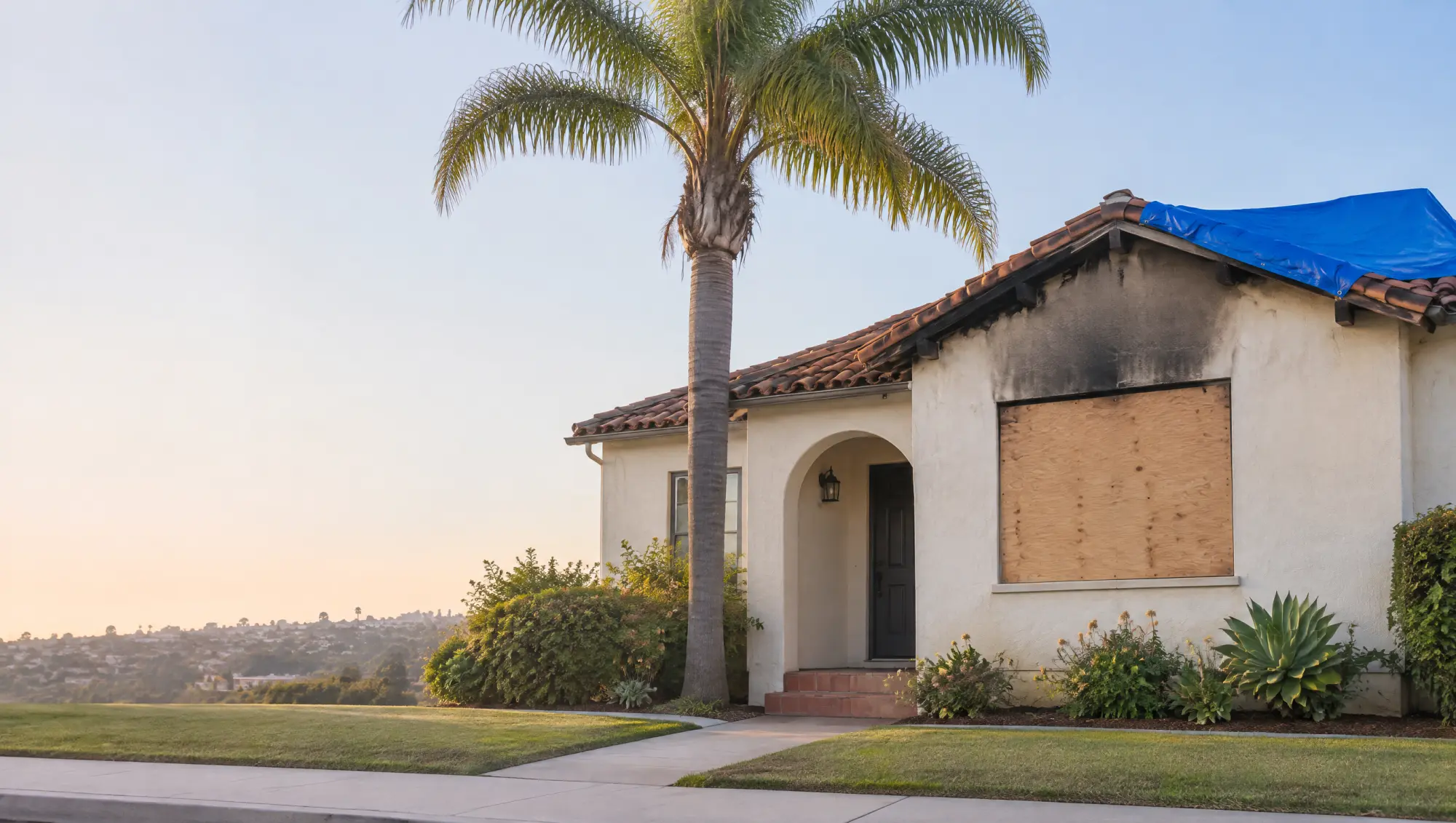
Broken windows, burned-out doors and holes in the roof let in rain, animals and people. Most policies expect you to protect the property from further damage, and securing it is usually part of the claim. We board up openings and tarp roofs 24/7 across San Diego County, and photograph the condition of each opening before we cover it.
Don't run the HVAC or wipe the soot
Two things make smoke damage worse in the first days:
- Running the HVAC. The system pulls soot from the burned rooms and blows it through the whole house, and it coats the ducts on the way. Keep it off until it has been checked, and change the filter before it runs again.
- Wiping soot. A wet cloth or a household cleaner smears soot into paint, grout and fabric and can set the stain for good. Soot is removed with dry-cleaning sponges, HEPA vacuums and cleaners matched to the type of residue.
If you need something from an affected room, carry it out, don't clean it on the spot.
Water from firefighting and mold risk
Putting out a house fire takes a lot of water, and it doesn't leave with the fire trucks. It soaks into carpet and pad, the bottom of the walls, insulation and the ceiling below a second floor. Wet materials can start growing mold within a day or two, so drying the house is as urgent as the soot.
We extract standing water, remove what can't be dried, and dry the structure with air movers and dehumidifiers, checking moisture readings until the materials are back to normal. It's the same process as any water damage restoration, done alongside the fire cleanup.
Smoke smell and what can be cleaned
Smoke odor lives in residue: on walls and ceilings, inside closets and cabinets, in the HVAC and in porous materials like drywall, insulation, carpet and upholstery. Air fresheners and fresh paint only cover it for a while. The smell goes away when the residue is cleaned or the material holding it is removed, and the framing is sealed before rebuilding.
- Usually cleanable: glass, metal, tile, sealed wood and other hard surfaces.
- Sometimes cleanable: drywall, cabinets, carpet and upholstery, depending on how much smoke they absorbed.
- Always replaced: anything charred.
We photograph affected rooms and materials so the salvage and replacement decisions are documented for your adjuster. More on smoke damage cleanup and smoke odor removal.
Wildfire smoke vs a house fire
A wildfire can damage a home the flames never reach. Fine ash and smoke get in through vents, attic openings, gaps around windows and the HVAC, and leave a film on surfaces and a smell in fabrics. The cleanup is different from a house fire: no burned rooms to demolish, but every surface where smoke settled, plus the attic and the HVAC registers, has to be checked.
Don't sweep or vacuum ash with a household vacuum: it spreads the finest particles. The IICRC fire and smoke standard (S700) does not cover wildfire smoke, so ask any company how they assess and clean it. Many homeowners policies cover wildfire smoke damage; your adjuster confirms coverage for your claim.
Who to call and in what order
- 911 and the fire department, until the fire is out and the building is cleared.
- Your insurance company, to open the claim.
- A fire and smoke restoration company, the same day, to board up, tarp the roof, extract the water and stop the soot from spreading. We answer 24/7.
- The utility companies, before gas or power is turned back on.
- An electrician, a roofer or an HVAC specialist when the restoration company finds damage in their trade.
- A licensed contractor for the rebuild. Maccraft is one (CSLB #1137252), so the same team can take the job from cleanup to the final coat of paint.
See how we handle the whole job on our fire and smoke damage restoration page.
Frequently Asked Questions
Still have a question? Call (619) 510-1998
How soon can I go back into my house after a fire?
Can I clean the soot myself?
Who pays for the board-up?
Will the smoke smell ever go away?
Do you handle small kitchen fires?
This guide is general information, not legal or insurance advice. Your policy and your adjuster decide coverage.
Fire or smoke damage?
Call (619) 510-1998, available 24/7, for board-up, soot and smoke cleanup and smoke odor removal. The inspection is free.
fire and smoke damage restoration →
 24/7 Board-Up
Work With Insurance
Free Inspection
 Call (619) 510‑1998